

Future of employment lies in online world: Sania Nishtar
Special Assistant to the Prime Minister Dr Sania Nishtar has convened a meeting with the technology team of Ehsaas on the forthcoming Ehsaas Digital Hunar Programme. The programme is rooted in the philosophy to empower disadvantaged youth through digital skills to make them employment ready. It is expected to train around 25,000 young people from the Ehsaas ecosystem.
Pakistan currently has one of the youngest populations in the world. According to the latest census, 60 per cent of the country’s population is under 35. Also, as per the estimates of the Higher Education Commission, the country is producing close to 500,000 graduates every year.
While speaking during the meeting, Dr Sania said the coronavirus pandemic has created a massive demand for digital skills. Post-COVID, she said, the future of employment is in the online world. “The Digital Hunar programme is expected to serve trainees not only in learning new digital skills but will also prepare them for the job market,” she said, adding that they are in the final stages of designing the programme for board approval.
saif
Ehsaas Digital Hunar is expected to deliver 3-6-month virtual programmes with in-demand market skills and hundred per cent employability. The programme includes five important resources—curriculum design and development; learning management system; affiliation programme with academia and private institutes; training programme; and freelance portal.
Given the complex nature of the Digital Hunar training subjects, Ehsaas will focus on the blended framework for curriculum design aligned with the needs of subject and students. Live sessions will be led by course instructors on a virtual training platform where participants will be able to interact with the instructors. All trainings will be delivered and monitored through the Learning Management System (LMS).
saif
Online learning resources and courses are expected to be based on module format, featuring reading content, video content, practice exercises, quizzes, and other learning materials. Lessons will cover textual content, externally related articles, and media presentations for the purpose of elaborating on concepts from the modules. To keep the course content interactive and engaging, each module is expected to include video content as well. Ehsaas Digital Hunar is being designed in an evidence-based manner taking stock of needs and options.
Dr Sania said, “One of the key challenges being faced by freelancers in Pakistan is the lack of financial integration of international freelance platforms with our financial systems.” Moreover, all international freelance portals charge 5 to 20 per cent as commission from employees as well as employers separately, she explained. To this end, she said, a freelance portal will be built under Ehsaas that will be free to use, assisting employees as well as international employers.
Secretary Ismat Tahira, DG Technology Meer Anwar and other senior officials were also present in the meeting.

Pandamart Launches in Lahore with a Mission to Generate an Ecosystem of Tech-Enabled Jobs
Disrupting the grocery delivery market space, foodpanda’s pandamart, an online shopping store in Pakistan, promises ultra-fast home delivery of over 10,000 everyday essential grocery, confectionery, and consumer goods items in 20 minutes. Available on the foodpanda app, pandamart has radically transformed the retail landscape in Pakistan.
Honourable MOC and Adviser to the PM for Commerce and Investment, Mr. Razak Dawood inaugurated a pandamart store in Islamabad where he was given a tour of the facility by Nauman Sikander, CEO foodpanda. National level investment opportunities, job creation, and delivery innovations were discussed as key benefits to the local economy during the visit.
Disrupting the traditional e-commerce space, pandamart uses location intelligence, identifying areas that would be most useful for consumers to fulfil their needs for daily essentials. Every item is sourced directly from the biggest national and international brands and is guaranteed to be fresh, authentic, and hygienic.

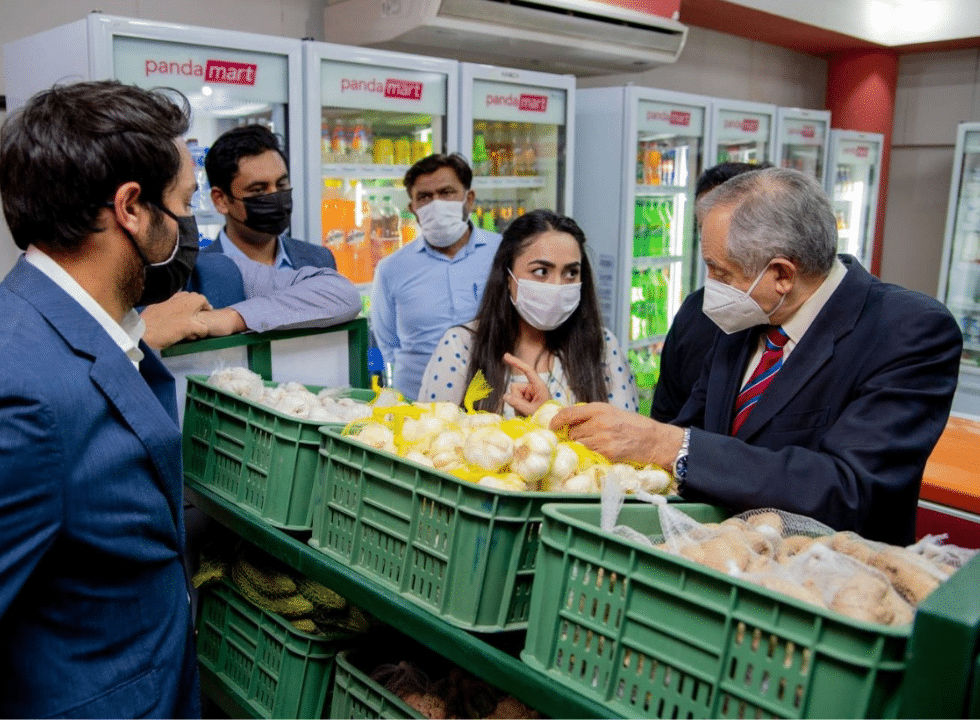
Addressing the press, CEO foodpanda, Nauman Sikander, said, “At foodpanda we strongly believe in democratizing the e-commerce opportunity. pandamart is the next phase in our mission to generate an ecosystem of tech-enabled jobs all over Pakistan.”

“With our expertise in technology and delivery operations, we will provide essential items to customers day or night, within 20 minutes, at their doorstep. This will not only save time and fuel cost but also minimize exposure to Covid-19,” he added.
During the visit, Mr Razak Dawood discussed the opportunities that such initiatives bring, including various investment opportunities, delivery innovations, employment, and business opportunities.
Speaking on the occasion, the Director Pandamart, Ibad Ahmed, said, “pandamart is the evolution of e-commerce into q-commerce. Traditional e-commerce delivers items in 3 to 5 days, with q-commerce and pandamart we can deliver them in as little as 20 minutes.”
“This speed and convenience holds immense potential for growth in Pakistan. Just as foodpanda revolutionized food delivery, pandamart will revolutionize grocery shopping in Pakistan,” he added.
foodpanda has launched over 25 pandamart outlets across Karachi and plans to expand its reach across the country with over 200 outlets over the next 2 year.
Future of employment lies in online world: Sania Nishtar
Special Assistant to the Prime Minister Dr Sania Nishtar has convened a meeting with the technology team of Ehsaas on the forthcoming Ehsaas Digital Hunar Programme. The programme is rooted in the philosophy to empower disadvantaged youth through digital skills to make them employment ready. It is expected to train around 25,000 young people from the Ehsaas ecosystem.
Pakistan currently has one of the youngest populations in the world. According to the latest census, 60 per cent of the country’s population is under 35. Also, as per the estimates of the Higher Education Commission, the country is producing close to 500,000 graduates every year.
While speaking during the meeting, Dr Sania said the coronavirus pandemic has created a massive demand for digital skills. Post-COVID, she said, the future of employment is in the online world. “The Digital Hunar programme is expected to serve trainees not only in learning new digital skills but will also prepare them for the job market,” she said, adding that they are in the final stages of designing the programme for board approval.
saif
Ehsaas Digital Hunar is expected to deliver 3-6-month virtual programmes with in-demand market skills and hundred per cent employability. The programme includes five important resources—curriculum design and development; learning management system; affiliation programme with academia and private institutes; training programme; and freelance portal.
Given the complex nature of the Digital Hunar training subjects, Ehsaas will focus on the blended framework for curriculum design aligned with the needs of subject and students. Live sessions will be led by course instructors on a virtual training platform where participants will be able to interact with the instructors. All trainings will be delivered and monitored through the Learning Management System (LMS).
saif
Online learning resources and courses are expected to be based on module format, featuring reading content, video content, practice exercises, quizzes, and other learning materials. Lessons will cover textual content, externally related articles, and media presentations for the purpose of elaborating on concepts from the modules. To keep the course content interactive and engaging, each module is expected to include video content as well. Ehsaas Digital Hunar is being designed in an evidence-based manner taking stock of needs and options.
Dr Sania said, “One of the key challenges being faced by freelancers in Pakistan is the lack of financial integration of international freelance platforms with our financial systems.” Moreover, all international freelance portals charge 5 to 20 per cent as commission from employees as well as employers separately, she explained. To this end, she said, a freelance portal will be built under Ehsaas that will be free to use, assisting employees as well as international employers.
Secretary Ismat Tahira, DG Technology Meer Anwar and other senior officials were also present in the meeting.
Future of employment lies in online world: Sania Nishtar
Special Assistant to the Prime Minister Dr Sania Nishtar has convened a meeting with the technology team of Ehsaas on the forthcoming Ehsaas Digital Hunar Programme. The programme is rooted in the philosophy to empower disadvantaged youth through digital skills to make them employment ready. It is expected to train around 25,000 young people from the Ehsaas ecosystem.
Pakistan currently has one of the youngest populations in the world. According to the latest census, 60 per cent of the country’s population is under 35. Also, as per the estimates of the Higher Education Commission, the country is producing close to 500,000 graduates every year.
While speaking during the meeting, Dr Sania said the coronavirus pandemic has created a massive demand for digital skills. Post-COVID, she said, the future of employment is in the online world. “The Digital Hunar programme is expected to serve trainees not only in learning new digital skills but will also prepare them for the job market,” she said, adding that they are in the final stages of designing the programme for board approval.
saif
Ehsaas Digital Hunar is expected to deliver 3-6-month virtual programmes with in-demand market skills and hundred per cent employability. The programme includes five important resources—curriculum design and development; learning management system; affiliation programme with academia and private institutes; training programme; and freelance portal.
Given the complex nature of the Digital Hunar training subjects, Ehsaas will focus on the blended framework for curriculum design aligned with the needs of subject and students. Live sessions will be led by course instructors on a virtual training platform where participants will be able to interact with the instructors. All trainings will be delivered and monitored through the Learning Management System (LMS).
saif
Online learning resources and courses are expected to be based on module format, featuring reading content, video content, practice exercises, quizzes, and other learning materials. Lessons will cover textual content, externally related articles, and media presentations for the purpose of elaborating on concepts from the modules. To keep the course content interactive and engaging, each module is expected to include video content as well. Ehsaas Digital Hunar is being designed in an evidence-based manner taking stock of needs and options.
Dr Sania said, “One of the key challenges being faced by freelancers in Pakistan is the lack of financial integration of international freelance platforms with our financial systems.” Moreover, all international freelance portals charge 5 to 20 per cent as commission from employees as well as employers separately, she explained. To this end, she said, a freelance portal will be built under Ehsaas that will be free to use, assisting employees as well as international employers.
Secretary Ismat Tahira, DG Technology Meer Anwar and other senior officials were also present in the meeting.
Future of employment lies in online world: Sania Nishtar
Special Assistant to the Prime Minister Dr Sania Nishtar has convened a meeting with the technology team of Ehsaas on the forthcoming Ehsaas Digital Hunar Programme. The programme is rooted in the philosophy to empower disadvantaged youth through digital skills to make them employment ready. It is expected to train around 25,000 young people from the Ehsaas ecosystem.
Pakistan currently has one of the youngest populations in the world. According to the latest census, 60 per cent of the country’s population is under 35. Also, as per the estimates of the Higher Education Commission, the country is producing close to 500,000 graduates every year.
While speaking during the meeting, Dr Sania said the coronavirus pandemic has created a massive demand for digital skills. Post-COVID, she said, the future of employment is in the online world. “The Digital Hunar programme is expected to serve trainees not only in learning new digital skills but will also prepare them for the job market,” she said, adding that they are in the final stages of designing the programme for board approval.
saif
Ehsaas Digital Hunar is expected to deliver 3-6-month virtual programmes with in-demand market skills and hundred per cent employability. The programme includes five important resources—curriculum design and development; learning management system; affiliation programme with academia and private institutes; training programme; and freelance portal.
Given the complex nature of the Digital Hunar training subjects, Ehsaas will focus on the blended framework for curriculum design aligned with the needs of subject and students. Live sessions will be led by course instructors on a virtual training platform where participants will be able to interact with the instructors. All trainings will be delivered and monitored through the Learning Management System (LMS).
saif
Online learning resources and courses are expected to be based on module format, featuring reading content, video content, practice exercises, quizzes, and other learning materials. Lessons will cover textual content, externally related articles, and media presentations for the purpose of elaborating on concepts from the modules. To keep the course content interactive and engaging, each module is expected to include video content as well. Ehsaas Digital Hunar is being designed in an evidence-based manner taking stock of needs and options.
Dr Sania said, “One of the key challenges being faced by freelancers in Pakistan is the lack of financial integration of international freelance platforms with our financial systems.” Moreover, all international freelance portals charge 5 to 20 per cent as commission from employees as well as employers separately, she explained. To this end, she said, a freelance portal will be built under Ehsaas that will be free to use, assisting employees as well as international employers.
Secretary Ismat Tahira, DG Technology Meer Anwar and other senior officials were also present in the meeting.
Future of employment lies in online world: Sania Nishtar
Special Assistant to the Prime Minister Dr Sania Nishtar has convened a meeting with the technology team of Ehsaas on the forthcoming Ehsaas Digital Hunar Programme. The programme is rooted in the philosophy to empower disadvantaged youth through digital skills to make them employment ready. It is expected to train around 25,000 young people from the Ehsaas ecosystem.
Pakistan currently has one of the youngest populations in the world. According to the latest census, 60 per cent of the country’s population is under 35. Also, as per the estimates of the Higher Education Commission, the country is producing close to 500,000 graduates every year.
While speaking during the meeting, Dr Sania said the coronavirus pandemic has created a massive demand for digital skills. Post-COVID, she said, the future of employment is in the online world. “The Digital Hunar programme is expected to serve trainees not only in learning new digital skills but will also prepare them for the job market,” she said, adding that they are in the final stages of designing the programme for board approval.
saif
Ehsaas Digital Hunar is expected to deliver 3-6-month virtual programmes with in-demand market skills and hundred per cent employability. The programme includes five important resources—curriculum design and development; learning management system; affiliation programme with academia and private institutes; training programme; and freelance portal.
Given the complex nature of the Digital Hunar training subjects, Ehsaas will focus on the blended framework for curriculum design aligned with the needs of subject and students. Live sessions will be led by course instructors on a virtual training platform where participants will be able to interact with the instructors. All trainings will be delivered and monitored through the Learning Management System (LMS).
saif
Online learning resources and courses are expected to be based on module format, featuring reading content, video content, practice exercises, quizzes, and other learning materials. Lessons will cover textual content, externally related articles, and media presentations for the purpose of elaborating on concepts from the modules. To keep the course content interactive and engaging, each module is expected to include video content as well. Ehsaas Digital Hunar is being designed in an evidence-based manner taking stock of needs and options.
Dr Sania said, “One of the key challenges being faced by freelancers in Pakistan is the lack of financial integration of international freelance platforms with our financial systems.” Moreover, all international freelance portals charge 5 to 20 per cent as commission from employees as well as employers separately, she explained. To this end, she said, a freelance portal will be built under Ehsaas that will be free to use, assisting employees as well as international employers.
Secretary Ismat Tahira, DG Technology Meer Anwar and other senior officials were also present in the meeting.
Future of employment lies in online world: Sania Nishtar
Special Assistant to the Prime Minister Dr Sania Nishtar has convened a meeting with the technology team of Ehsaas on the forthcoming Ehsaas Digital Hunar Programme. The programme is rooted in the philosophy to empower disadvantaged youth through digital skills to make them employment ready. It is expected to train around 25,000 young people from the Ehsaas ecosystem.
Pakistan currently has one of the youngest populations in the world. According to the latest census, 60 per cent of the country’s population is under 35. Also, as per the estimates of the Higher Education Commission, the country is producing close to 500,000 graduates every year.
While speaking during the meeting, Dr Sania said the coronavirus pandemic has created a massive demand for digital skills. Post-COVID, she said, the future of employment is in the online world. “The Digital Hunar programme is expected to serve trainees not only in learning new digital skills but will also prepare them for the job market,” she said, adding that they are in the final stages of designing the programme for board approval.
saif
Ehsaas Digital Hunar is expected to deliver 3-6-month virtual programmes with in-demand market skills and hundred per cent employability. The programme includes five important resources—curriculum design and development; learning management system; affiliation programme with academia and private institutes; training programme; and freelance portal.
Given the complex nature of the Digital Hunar training subjects, Ehsaas will focus on the blended framework for curriculum design aligned with the needs of subject and students. Live sessions will be led by course instructors on a virtual training platform where participants will be able to interact with the instructors. All trainings will be delivered and monitored through the Learning Management System (LMS).
saif
Online learning resources and courses are expected to be based on module format, featuring reading content, video content, practice exercises, quizzes, and other learning materials. Lessons will cover textual content, externally related articles, and media presentations for the purpose of elaborating on concepts from the modules. To keep the course content interactive and engaging, each module is expected to include video content as well. Ehsaas Digital Hunar is being designed in an evidence-based manner taking stock of needs and options.
Dr Sania said, “One of the key challenges being faced by freelancers in Pakistan is the lack of financial integration of international freelance platforms with our financial systems.” Moreover, all international freelance portals charge 5 to 20 per cent as commission from employees as well as employers separately, she explained. To this end, she said, a freelance portal will be built under Ehsaas that will be free to use, assisting employees as well as international employers.
Secretary Ismat Tahira, DG Technology Meer Anwar and other senior officials were also present in the meeting.
Future of employment lies in online world: Sania Nishtar
Special Assistant to the Prime Minister Dr Sania Nishtar has convened a meeting with the technology team of Ehsaas on the forthcoming Ehsaas Digital Hunar Programme. The programme is rooted in the philosophy to empower disadvantaged youth through digital skills to make them employment ready. It is expected to train around 25,000 young people from the Ehsaas ecosystem.
Pakistan currently has one of the youngest populations in the world. According to the latest census, 60 per cent of the country’s population is under 35. Also, as per the estimates of the Higher Education Commission, the country is producing close to 500,000 graduates every year.
While speaking during the meeting, Dr Sania said the coronavirus pandemic has created a massive demand for digital skills. Post-COVID, she said, the future of employment is in the online world. “The Digital Hunar programme is expected to serve trainees not only in learning new digital skills but will also prepare them for the job market,” she said, adding that they are in the final stages of designing the programme for board approval.
saif
Ehsaas Digital Hunar is expected to deliver 3-6-month virtual programmes with in-demand market skills and hundred per cent employability. The programme includes five important resources—curriculum design and development; learning management system; affiliation programme with academia and private institutes; training programme; and freelance portal.
Given the complex nature of the Digital Hunar training subjects, Ehsaas will focus on the blended framework for curriculum design aligned with the needs of subject and students. Live sessions will be led by course instructors on a virtual training platform where participants will be able to interact with the instructors. All trainings will be delivered and monitored through the Learning Management System (LMS).
saif
Online learning resources and courses are expected to be based on module format, featuring reading content, video content, practice exercises, quizzes, and other learning materials. Lessons will cover textual content, externally related articles, and media presentations for the purpose of elaborating on concepts from the modules. To keep the course content interactive and engaging, each module is expected to include video content as well. Ehsaas Digital Hunar is being designed in an evidence-based manner taking stock of needs and options.
Dr Sania said, “One of the key challenges being faced by freelancers in Pakistan is the lack of financial integration of international freelance platforms with our financial systems.” Moreover, all international freelance portals charge 5 to 20 per cent as commission from employees as well as employers separately, she explained. To this end, she said, a freelance portal will be built under Ehsaas that will be free to use, assisting employees as well as international employers.
Secretary Ismat Tahira, DG Technology Meer Anwar and other senior officials were also present in the meeting.
Future of employment lies in online world: Sania Nishtar
Special Assistant to the Prime Minister Dr Sania Nishtar has convened a meeting with the technology team of Ehsaas on the forthcoming Ehsaas Digital Hunar Programme. The programme is rooted in the philosophy to empower disadvantaged youth through digital skills to make them employment ready. It is expected to train around 25,000 young people from the Ehsaas ecosystem.
Pakistan currently has one of the youngest populations in the world. According to the latest census, 60 per cent of the country’s population is under 35. Also, as per the estimates of the Higher Education Commission, the country is producing close to 500,000 graduates every year.
While speaking during the meeting, Dr Sania said the coronavirus pandemic has created a massive demand for digital skills. Post-COVID, she said, the future of employment is in the online world. “The Digital Hunar programme is expected to serve trainees not only in learning new digital skills but will also prepare them for the job market,” she said, adding that they are in the final stages of designing the programme for board approval.
saif
Ehsaas Digital Hunar is expected to deliver 3-6-month virtual programmes with in-demand market skills and hundred per cent employability. The programme includes five important resources—curriculum design and development; learning management system; affiliation programme with academia and private institutes; training programme; and freelance portal.
Given the complex nature of the Digital Hunar training subjects, Ehsaas will focus on the blended framework for curriculum design aligned with the needs of subject and students. Live sessions will be led by course instructors on a virtual training platform where participants will be able to interact with the instructors. All trainings will be delivered and monitored through the Learning Management System (LMS).
saif
Online learning resources and courses are expected to be based on module format, featuring reading content, video content, practice exercises, quizzes, and other learning materials. Lessons will cover textual content, externally related articles, and media presentations for the purpose of elaborating on concepts from the modules. To keep the course content interactive and engaging, each module is expected to include video content as well. Ehsaas Digital Hunar is being designed in an evidence-based manner taking stock of needs and options.
Dr Sania said, “One of the key challenges being faced by freelancers in Pakistan is the lack of financial integration of international freelance platforms with our financial systems.” Moreover, all international freelance portals charge 5 to 20 per cent as commission from employees as well as employers separately, she explained. To this end, she said, a freelance portal will be built under Ehsaas that will be free to use, assisting employees as well as international employers.
Secretary Ismat Tahira, DG Technology Meer Anwar and other senior officials were also present in the meeting.
Future of employment lies in online world: Sania Nishtar
Special Assistant to the Prime Minister Dr Sania Nishtar has convened a meeting with the technology team of Ehsaas on the forthcoming Ehsaas Digital Hunar Programme. The programme is rooted in the philosophy to empower disadvantaged youth through digital skills to make them employment ready. It is expected to train around 25,000 young people from the Ehsaas ecosystem.
Pakistan currently has one of the youngest populations in the world. According to the latest census, 60 per cent of the country’s population is under 35. Also, as per the estimates of the Higher Education Commission, the country is producing close to 500,000 graduates every year.
While speaking during the meeting, Dr Sania said the coronavirus pandemic has created a massive demand for digital skills. Post-COVID, she said, the future of employment is in the online world. “The Digital Hunar programme is expected to serve trainees not only in learning new digital skills but will also prepare them for the job market,” she said, adding that they are in the final stages of designing the programme for board approval.
saif
Ehsaas Digital Hunar is expected to deliver 3-6-month virtual programmes with in-demand market skills and hundred per cent employability. The programme includes five important resources—curriculum design and development; learning management system; affiliation programme with academia and private institutes; training programme; and freelance portal.
Given the complex nature of the Digital Hunar training subjects, Ehsaas will focus on the blended framework for curriculum design aligned with the needs of subject and students. Live sessions will be led by course instructors on a virtual training platform where participants will be able to interact with the instructors. All trainings will be delivered and monitored through the Learning Management System (LMS).
saif
Online learning resources and courses are expected to be based on module format, featuring reading content, video content, practice exercises, quizzes, and other learning materials. Lessons will cover textual content, externally related articles, and media presentations for the purpose of elaborating on concepts from the modules. To keep the course content interactive and engaging, each module is expected to include video content as well. Ehsaas Digital Hunar is being designed in an evidence-based manner taking stock of needs and options.
Dr Sania said, “One of the key challenges being faced by freelancers in Pakistan is the lack of financial integration of international freelance platforms with our financial systems.” Moreover, all international freelance portals charge 5 to 20 per cent as commission from employees as well as employers separately, she explained. To this end, she said, a freelance portal will be built under Ehsaas that will be free to use, assisting employees as well as international employers.
Secretary Ismat Tahira, DG Technology Meer Anwar and other senior officials were also present in the meeting.
Future of employment lies in online world: Sania Nishtar
Special Assistant to the Prime Minister Dr Sania Nishtar has convened a meeting with the technology team of Ehsaas on the forthcoming Ehsaas Digital Hunar Programme. The programme is rooted in the philosophy to empower disadvantaged youth through digital skills to make them employment ready. It is expected to train around 25,000 young people from the Ehsaas ecosystem.
Pakistan currently has one of the youngest populations in the world. According to the latest census, 60 per cent of the country’s population is under 35. Also, as per the estimates of the Higher Education Commission, the country is producing close to 500,000 graduates every year.
While speaking during the meeting, Dr Sania said the coronavirus pandemic has created a massive demand for digital skills. Post-COVID, she said, the future of employment is in the online world. “The Digital Hunar programme is expected to serve trainees not only in learning new digital skills but will also prepare them for the job market,” she said, adding that they are in the final stages of designing the programme for board approval.
saif
Ehsaas Digital Hunar is expected to deliver 3-6-month virtual programmes with in-demand market skills and hundred per cent employability. The programme includes five important resources—curriculum design and development; learning management system; affiliation programme with academia and private institutes; training programme; and freelance portal.
Given the complex nature of the Digital Hunar training subjects, Ehsaas will focus on the blended framework for curriculum design aligned with the needs of subject and students. Live sessions will be led by course instructors on a virtual training platform where participants will be able to interact with the instructors. All trainings will be delivered and monitored through the Learning Management System (LMS).
saif
Online learning resources and courses are expected to be based on module format, featuring reading content, video content, practice exercises, quizzes, and other learning materials. Lessons will cover textual content, externally related articles, and media presentations for the purpose of elaborating on concepts from the modules. To keep the course content interactive and engaging, each module is expected to include video content as well. Ehsaas Digital Hunar is being designed in an evidence-based manner taking stock of needs and options.
Dr Sania said, “One of the key challenges being faced by freelancers in Pakistan is the lack of financial integration of international freelance platforms with our financial systems.” Moreover, all international freelance portals charge 5 to 20 per cent as commission from employees as well as employers separately, she explained. To this end, she said, a freelance portal will be built under Ehsaas that will be free to use, assisting employees as well as international employers.
Secretary Ismat Tahira, DG Technology Meer Anwar and other senior officials were also present in the meeting.
Future of employment lies in online world: Sania Nishtar
Special Assistant to the Prime Minister Dr Sania Nishtar has convened a meeting with the technology team of Ehsaas on the forthcoming Ehsaas Digital Hunar Programme. The programme is rooted in the philosophy to empower disadvantaged youth through digital skills to make them employment ready. It is expected to train around 25,000 young people from the Ehsaas ecosystem.
Pakistan currently has one of the youngest populations in the world. According to the latest census, 60 per cent of the country’s population is under 35. Also, as per the estimates of the Higher Education Commission, the country is producing close to 500,000 graduates every year.
While speaking during the meeting, Dr Sania said the coronavirus pandemic has created a massive demand for digital skills. Post-COVID, she said, the future of employment is in the online world. “The Digital Hunar programme is expected to serve trainees not only in learning new digital skills but will also prepare them for the job market,” she said, adding that they are in the final stages of designing the programme for board approval.
saif
Ehsaas Digital Hunar is expected to deliver 3-6-month virtual programmes with in-demand market skills and hundred per cent employability. The programme includes five important resources—curriculum design and development; learning management system; affiliation programme with academia and private institutes; training programme; and freelance portal.
Given the complex nature of the Digital Hunar training subjects, Ehsaas will focus on the blended framework for curriculum design aligned with the needs of subject and students. Live sessions will be led by course instructors on a virtual training platform where participants will be able to interact with the instructors. All trainings will be delivered and monitored through the Learning Management System (LMS).
saif
Online learning resources and courses are expected to be based on module format, featuring reading content, video content, practice exercises, quizzes, and other learning materials. Lessons will cover textual content, externally related articles, and media presentations for the purpose of elaborating on concepts from the modules. To keep the course content interactive and engaging, each module is expected to include video content as well. Ehsaas Digital Hunar is being designed in an evidence-based manner taking stock of needs and options.
Dr Sania said, “One of the key challenges being faced by freelancers in Pakistan is the lack of financial integration of international freelance platforms with our financial systems.” Moreover, all international freelance portals charge 5 to 20 per cent as commission from employees as well as employers separately, she explained. To this end, she said, a freelance portal will be built under Ehsaas that will be free to use, assisting employees as well as international employers.
Secretary Ismat Tahira, DG Technology Meer Anwar and other senior officials were also present in the meeting.
Future of employment lies in online world: Sania Nishtar
Special Assistant to the Prime Minister Dr Sania Nishtar has convened a meeting with the technology team of Ehsaas on the forthcoming Ehsaas Digital Hunar Programme. The programme is rooted in the philosophy to empower disadvantaged youth through digital skills to make them employment ready. It is expected to train around 25,000 young people from the Ehsaas ecosystem.
Pakistan currently has one of the youngest populations in the world. According to the latest census, 60 per cent of the country’s population is under 35. Also, as per the estimates of the Higher Education Commission, the country is producing close to 500,000 graduates every year.
While speaking during the meeting, Dr Sania said the coronavirus pandemic has created a massive demand for digital skills. Post-COVID, she said, the future of employment is in the online world. “The Digital Hunar programme is expected to serve trainees not only in learning new digital skills but will also prepare them for the job market,” she said, adding that they are in the final stages of designing the programme for board approval.
saif
Ehsaas Digital Hunar is expected to deliver 3-6-month virtual programmes with in-demand market skills and hundred per cent employability. The programme includes five important resources—curriculum design and development; learning management system; affiliation programme with academia and private institutes; training programme; and freelance portal.
Given the complex nature of the Digital Hunar training subjects, Ehsaas will focus on the blended framework for curriculum design aligned with the needs of subject and students. Live sessions will be led by course instructors on a virtual training platform where participants will be able to interact with the instructors. All trainings will be delivered and monitored through the Learning Management System (LMS).
saif
Online learning resources and courses are expected to be based on module format, featuring reading content, video content, practice exercises, quizzes, and other learning materials. Lessons will cover textual content, externally related articles, and media presentations for the purpose of elaborating on concepts from the modules. To keep the course content interactive and engaging, each module is expected to include video content as well. Ehsaas Digital Hunar is being designed in an evidence-based manner taking stock of needs and options.
Dr Sania said, “One of the key challenges being faced by freelancers in Pakistan is the lack of financial integration of international freelance platforms with our financial systems.” Moreover, all international freelance portals charge 5 to 20 per cent as commission from employees as well as employers separately, she explained. To this end, she said, a freelance portal will be built under Ehsaas that will be free to use, assisting employees as well as international employers.
Secretary Ismat Tahira, DG Technology Meer Anwar and other senior officials were also present in the meeting.
Future of employment lies in online world: Sania Nishtar
Special Assistant to the Prime Minister Dr Sania Nishtar has convened a meeting with the technology team of Ehsaas on the forthcoming Ehsaas Digital Hunar Programme. The programme is rooted in the philosophy to empower disadvantaged youth through digital skills to make them employment ready. It is expected to train around 25,000 young people from the Ehsaas ecosystem.
Pakistan currently has one of the youngest populations in the world. According to the latest census, 60 per cent of the country’s population is under 35. Also, as per the estimates of the Higher Education Commission, the country is producing close to 500,000 graduates every year.
While speaking during the meeting, Dr Sania said the coronavirus pandemic has created a massive demand for digital skills. Post-COVID, she said, the future of employment is in the online world. “The Digital Hunar programme is expected to serve trainees not only in learning new digital skills but will also prepare them for the job market,” she said, adding that they are in the final stages of designing the programme for board approval.
saif
Ehsaas Digital Hunar is expected to deliver 3-6-month virtual programmes with in-demand market skills and hundred per cent employability. The programme includes five important resources—curriculum design and development; learning management system; affiliation programme with academia and private institutes; training programme; and freelance portal.
Given the complex nature of the Digital Hunar training subjects, Ehsaas will focus on the blended framework for curriculum design aligned with the needs of subject and students. Live sessions will be led by course instructors on a virtual training platform where participants will be able to interact with the instructors. All trainings will be delivered and monitored through the Learning Management System (LMS).
saif
Online learning resources and courses are expected to be based on module format, featuring reading content, video content, practice exercises, quizzes, and other learning materials. Lessons will cover textual content, externally related articles, and media presentations for the purpose of elaborating on concepts from the modules. To keep the course content interactive and engaging, each module is expected to include video content as well. Ehsaas Digital Hunar is being designed in an evidence-based manner taking stock of needs and options.
Dr Sania said, “One of the key challenges being faced by freelancers in Pakistan is the lack of financial integration of international freelance platforms with our financial systems.” Moreover, all international freelance portals charge 5 to 20 per cent as commission from employees as well as employers separately, she explained. To this end, she said, a freelance portal will be built under Ehsaas that will be free to use, assisting employees as well as international employers.
Secretary Ismat Tahira, DG Technology Meer Anwar and other senior officials were also present in the meeting.
Future of employment lies in online world: Sania Nishtar
Special Assistant to the Prime Minister Dr Sania Nishtar has convened a meeting with the technology team of Ehsaas on the forthcoming Ehsaas Digital Hunar Programme. The programme is rooted in the philosophy to empower disadvantaged youth through digital skills to make them employment ready. It is expected to train around 25,000 young people from the Ehsaas ecosystem.
Pakistan currently has one of the youngest populations in the world. According to the latest census, 60 per cent of the country’s population is under 35. Also, as per the estimates of the Higher Education Commission, the country is producing close to 500,000 graduates every year.
While speaking during the meeting, Dr Sania said the coronavirus pandemic has created a massive demand for digital skills. Post-COVID, she said, the future of employment is in the online world. “The Digital Hunar programme is expected to serve trainees not only in learning new digital skills but will also prepare them for the job market,” she said, adding that they are in the final stages of designing the programme for board approval.
saif
Ehsaas Digital Hunar is expected to deliver 3-6-month virtual programmes with in-demand market skills and hundred per cent employability. The programme includes five important resources—curriculum design and development; learning management system; affiliation programme with academia and private institutes; training programme; and freelance portal.
Given the complex nature of the Digital Hunar training subjects, Ehsaas will focus on the blended framework for curriculum design aligned with the needs of subject and students. Live sessions will be led by course instructors on a virtual training platform where participants will be able to interact with the instructors. All trainings will be delivered and monitored through the Learning Management System (LMS).
saif
Online learning resources and courses are expected to be based on module format, featuring reading content, video content, practice exercises, quizzes, and other learning materials. Lessons will cover textual content, externally related articles, and media presentations for the purpose of elaborating on concepts from the modules. To keep the course content interactive and engaging, each module is expected to include video content as well. Ehsaas Digital Hunar is being designed in an evidence-based manner taking stock of needs and options.
Dr Sania said, “One of the key challenges being faced by freelancers in Pakistan is the lack of financial integration of international freelance platforms with our financial systems.” Moreover, all international freelance portals charge 5 to 20 per cent as commission from employees as well as employers separately, she explained. To this end, she said, a freelance portal will be built under Ehsaas that will be free to use, assisting employees as well as international employers.
Secretary Ismat Tahira, DG Technology Meer Anwar and other senior officials were also present in the meeting.
Future of employment lies in online world: Sania Nishtar
Special Assistant to the Prime Minister Dr Sania Nishtar has convened a meeting with the technology team of Ehsaas on the forthcoming Ehsaas Digital Hunar Programme. The programme is rooted in the philosophy to empower disadvantaged youth through digital skills to make them employment ready. It is expected to train around 25,000 young people from the Ehsaas ecosystem.
Pakistan currently has one of the youngest populations in the world. According to the latest census, 60 per cent of the country’s population is under 35. Also, as per the estimates of the Higher Education Commission, the country is producing close to 500,000 graduates every year.
While speaking during the meeting, Dr Sania said the coronavirus pandemic has created a massive demand for digital skills. Post-COVID, she said, the future of employment is in the online world. “The Digital Hunar programme is expected to serve trainees not only in learning new digital skills but will also prepare them for the job market,” she said, adding that they are in the final stages of designing the programme for board approval.
saif
Ehsaas Digital Hunar is expected to deliver 3-6-month virtual programmes with in-demand market skills and hundred per cent employability. The programme includes five important resources—curriculum design and development; learning management system; affiliation programme with academia and private institutes; training programme; and freelance portal.
Given the complex nature of the Digital Hunar training subjects, Ehsaas will focus on the blended framework for curriculum design aligned with the needs of subject and students. Live sessions will be led by course instructors on a virtual training platform where participants will be able to interact with the instructors. All trainings will be delivered and monitored through the Learning Management System (LMS).
saif
Online learning resources and courses are expected to be based on module format, featuring reading content, video content, practice exercises, quizzes, and other learning materials. Lessons will cover textual content, externally related articles, and media presentations for the purpose of elaborating on concepts from the modules. To keep the course content interactive and engaging, each module is expected to include video content as well. Ehsaas Digital Hunar is being designed in an evidence-based manner taking stock of needs and options.
Dr Sania said, “One of the key challenges being faced by freelancers in Pakistan is the lack of financial integration of international freelance platforms with our financial systems.” Moreover, all international freelance portals charge 5 to 20 per cent as commission from employees as well as employers separately, she explained. To this end, she said, a freelance portal will be built under Ehsaas that will be free to use, assisting employees as well as international employers.
Secretary Ismat Tahira, DG Technology Meer Anwar and other senior officials were also present in the meeting.
Future of employment lies in online world: Sania Nishtar
Special Assistant to the Prime Minister Dr Sania Nishtar has convened a meeting with the technology team of Ehsaas on the forthcoming Ehsaas Digital Hunar Programme. The programme is rooted in the philosophy to empower disadvantaged youth through digital skills to make them employment ready. It is expected to train around 25,000 young people from the Ehsaas ecosystem.
Pakistan currently has one of the youngest populations in the world. According to the latest census, 60 per cent of the country’s population is under 35. Also, as per the estimates of the Higher Education Commission, the country is producing close to 500,000 graduates every year.
While speaking during the meeting, Dr Sania said the coronavirus pandemic has created a massive demand for digital skills. Post-COVID, she said, the future of employment is in the online world. “The Digital Hunar programme is expected to serve trainees not only in learning new digital skills but will also prepare them for the job market,” she said, adding that they are in the final stages of designing the programme for board approval.
saif
Ehsaas Digital Hunar is expected to deliver 3-6-month virtual programmes with in-demand market skills and hundred per cent employability. The programme includes five important resources—curriculum design and development; learning management system; affiliation programme with academia and private institutes; training programme; and freelance portal.
Given the complex nature of the Digital Hunar training subjects, Ehsaas will focus on the blended framework for curriculum design aligned with the needs of subject and students. Live sessions will be led by course instructors on a virtual training platform where participants will be able to interact with the instructors. All trainings will be delivered and monitored through the Learning Management System (LMS).
saif
Online learning resources and courses are expected to be based on module format, featuring reading content, video content, practice exercises, quizzes, and other learning materials. Lessons will cover textual content, externally related articles, and media presentations for the purpose of elaborating on concepts from the modules. To keep the course content interactive and engaging, each module is expected to include video content as well. Ehsaas Digital Hunar is being designed in an evidence-based manner taking stock of needs and options.
Dr Sania said, “One of the key challenges being faced by freelancers in Pakistan is the lack of financial integration of international freelance platforms with our financial systems.” Moreover, all international freelance portals charge 5 to 20 per cent as commission from employees as well as employers separately, she explained. To this end, she said, a freelance portal will be built under Ehsaas that will be free to use, assisting employees as well as international employers.
Secretary Ismat Tahira, DG Technology Meer Anwar and other senior officials were also present in the meeting.
"The Sinclrey www.onlinejob.com Team"
"Thank You So Much"


0 Comments
Thanks For Messageing